I Used to Think Art Was a Luxury.
I didn’t expect an ordinary meeting at work to become the beginning of something entirely different.
While I was on vacation, my employers messaged asking if we could meet when I got back. I assumed it was finally going to be the performance review and salary discussion that had been hanging in the air for months. Instead, I walked into a conversation about reducing payroll costs. Somewhere between discussing staffing hours and trying to defend my team, it became painfully clear that we weren’t really talking about payroll at all. We simply had very different philosophies about how a business should be run, and for the first time, I wondered whether I had simply outgrown my role.
That meeting stayed with me long after it ended. I applied for another Area Director position, the first job application I’d submitted in almost ten years, and completely bombed the interview. The rejection wasn’t really what hurt. What hurt was the realization that followed. I wasn’t ready to leave the security of my current job, but I couldn’t imagine staying either. For the first time in a very long time, I felt stuck.
The weeks that followed felt unusually heavy. I kept showing up to work, but only half of me was really there. My mind kept searching for an exit plan while my heart resisted every option I came up with. One evening, I came home convinced that I needed to resign, hoping my husband would somehow make the decision easier. Instead, we talked about responsibilities, bills and practicalities. None of those concerns were unreasonable, but when the conversation ended, I realized nobody else was going to solve this for me. Whatever came next, I would have to create it myself.
Once I accepted that I needed a way forward, my mind did what it always does—it started making lists. I considered applying for more leadership roles. I even joked about becoming a barista or driving for Uber. Every option felt like an escape hatch, but the more I explored them, the more I noticed they all had one thing in common. I’d still be working for someone else. I’d simply be exchanging one employer for another, hoping our values aligned a little better this time. There was no guarantee I’d end up feeling any differently a year later.
That realization led me somewhere I had been returning to for years.
I’d spoken often about my dream of becoming a full-time artist and spending my summers exhibiting at art walks. Every year, I’d arrive full of hope. Every year, I’d come home with a car still full of paintings. Sometimes I sold nothing at all. Other times I had wonderful weekends, only to realize many of those sales had come after offering significant discounts.
Please don’t misunderstand me. I am deeply grateful to every single person who has welcomed one of my paintings into their home. Without you, none of this would have been possible. But every artist knows what happens when you unpack the same paintings year after year. The mind starts telling stories. Maybe you’re not good at selling. Maybe your work isn’t good enough. Maybe art was never meant to pay the bills.
Eventually, I convinced myself of something that felt painfully true. Art is a luxury, not a necessity.
Anyone who has exhibited at an art walk will probably recognize that feeling. People stop, smile and tell you how much they love your work. They tell you the colours make them happy or that a particular painting reminds them of someone they love. Then they quietly walk away because they don’t have the space, the budget or a good enough reason to buy it.
Over time, I stopped questioning that reality. I simply accepted that art belonged in the “nice to have” category rather than the “need to have” category. But this time, something felt different. Instead of accepting that explanation, I found myself questioning it.
Was art really a luxury?
Or had I misunderstood the problem it was solving?
The more I reflected on it, the more I realized I had been asking the wrong question. Art doesn’t solve the kinds of problems we’re used to paying for. It won’t lower your mortgage or clear your inbox. Because of that, it’s easy to dismiss it as something nice to have rather than something worth investing in. But maybe that was never its purpose.
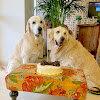
After losing Sam, I didn’t choose abstract art. Somehow, abstract art chose me. There was no other way I knew to hold onto the unconditional love, joy and happiness he had brought into my life. I couldn’t put those feelings into words, but somehow I could pour them onto a canvas.
Painting didn’t erase the pain, and it certainly didn’t bring him back. But over the months and years that followed, it became the place where I could quietly lay down emotions that were too heavy to carry all the time. It also became my way of telling the world, I had a dog who loved me with everything he had, and I hope, somehow, you feel a little of that love every time you look at my work.
Perhaps that’s why every painting has always felt like a small piece of him finding another home.
That’s when everything finally made sense.
Maybe art doesn’t solve the obvious problems.
Maybe it solves the quieter ones.
The kind that only we can feel.
Just like the paintings hanging on the walls of our homes.
Most people walk past them without giving them a second thought, but the person who chose them knows exactly why they’re there. They know the memory that painting holds, the feeling it brings or the quiet smile it creates every time they walk into the room. Only they know the difference it makes.
Perhaps that’s why so many people believe they don’t need art. It’s not because art has no value. It’s because its greatest value often can’t be measured.
And yet, even after that realization, another question kept returning.
Why was selling my work still so important to me? Was it the sale itself? Or was it because I wanted to share that feeling with more people?
I realized I didn’t want to spend my life creating paintings that only I would ever experience. I wanted them to leave my studio. I wanted them to become part of other people’s stories. But somewhere along the way, I also sensed I was searching for something deeper—something I couldn’t quite name at the time.
Around that same time, my sister and I were brainstorming business ideas. She already teaches French, so naturally we started throwing around possibilities—French, yoga and art classes for children. It was a fun conversation, but afterwards one question stayed with me.
Why children?
The people I couldn’t stop thinking about were adults. More specifically, women who spend so much of their lives caring for everyone else that they rarely pause to care for themselves.
I know, because for a long time, I forgot to care for myself too.
By then, I had stopped trying to solve my future and started paying closer attention to what was helping me through the present.
One day, I made a decision that seemed completely sensible at the time. With so much financial uncertainty ahead, getting my nails done suddenly felt like an unnecessary expense. I had them removed instead.
It sounds like such a small thing, but over the following weeks, every time I looked at my hands, I felt a little worse. It wasn’t really about my nails. They had simply become a daily reminder of everything I was carrying. I questioned my future, worried about my finances and replayed work conversations over and over in my mind. The only time those thoughts seemed to quiet down was when I painted.
When I painted, I wasn’t thinking about my job or my worries about the future. I wasn’t trying to solve anything. I was simply present. For a little while, my mind stopped racing and my attention shifted entirely to colour, movement and the canvas in front of me.
A couple of weeks later, I finally booked another nail appointment. I walked out feeling lighter, happier and more like myself. I remember thinking that perhaps this was the self-care I’d been missing.
The feeling lasted less than twenty-four hours. The very next morning, one of my Lead Assistant Directors resigned. Within minutes, all the stress, uncertainty and heaviness I had been carrying returned as though it had never left.
That was the moment something clicked.
The confidence I had felt the day before hadn’t disappeared because my nails looked different. It disappeared because it had been built on something external. As wonderful as those little acts of self-care can be, their effect often fades as soon as life throws something difficult our way.
It made me think differently about self-care altogether.
So often, we associate self-care with things someone else does for us—a manicure, a massage, a nice meal or a vacation. There is absolutely nothing wrong with any of those things. I still love getting my nails done. But the practices that seem to create lasting change are often the ones that ask us to participate. A walk strengthens our body while calming our mind. Exercise leaves us feeling mentally clearer as well as physically stronger. Reading allows us to see ourselves through someone else’s story. Meditation doesn’t remove our problems, but it often changes the way we return to them.
The more I reflected on it, the more I wondered whether art belonged in that same category.
Not because everyone wants to become an artist.
But because everyone carries thoughts and emotions that don’t always have words.
You don’t need artistic talent to express yourself through colour. You simply need permission to pause long enough to notice what’s happening within you.
That is exactly what painting had quietly become for me.
I never picked up a paintbrush believing it would change the way I understood myself. I painted because I missed Sam. Somewhere along the way, painting became a practice that helped me slow down, reflect and reconnect with myself. The painting itself was never the most important part. What mattered was the space it created within me while I was making it.
That’s when I realized something.
Perhaps what I had been searching for wasn’t another career.
It wasn’t another employer.
It wasn’t even another way to sell my art.
What I had really been searching for was a way to share the experience that painting had given me.
Not the techniques.
Not the finished paintings.
The experience itself.
That is the beginning of The Inner Canvas.
The Inner Canvas is a creative self-care practice built around curiosity, reflection and colour. It is an invitation to pause, to notice what is happening within you, to write if words come, to make marks if they don’t, and to let colour continue the conversation where words begin to fall short.
There is no painting to copy.
No expectation to create something beautiful.
No pressure to share.
Only an opportunity to spend a little time with yourself, without judgment, and discover what appears when you stop trying to create and simply begin.
Will a couple of hours change your life?
Probably not.
But perhaps they will remind you that caring for yourself isn’t something to squeeze into the spaces left over after you’ve looked after everyone else.
Perhaps they will remind you that creativity isn’t reserved for artists.
Perhaps they will remind you that slowing down is not the opposite of productivity, but sometimes the beginning of clarity.
And perhaps, just as painting quietly transformed my relationship with myself, it might offer you something you didn’t even know you were looking for.
Perhaps the most meaningful thing we create isn’t the painting we take home. Perhaps it’s the space we make to meet ourselves again.